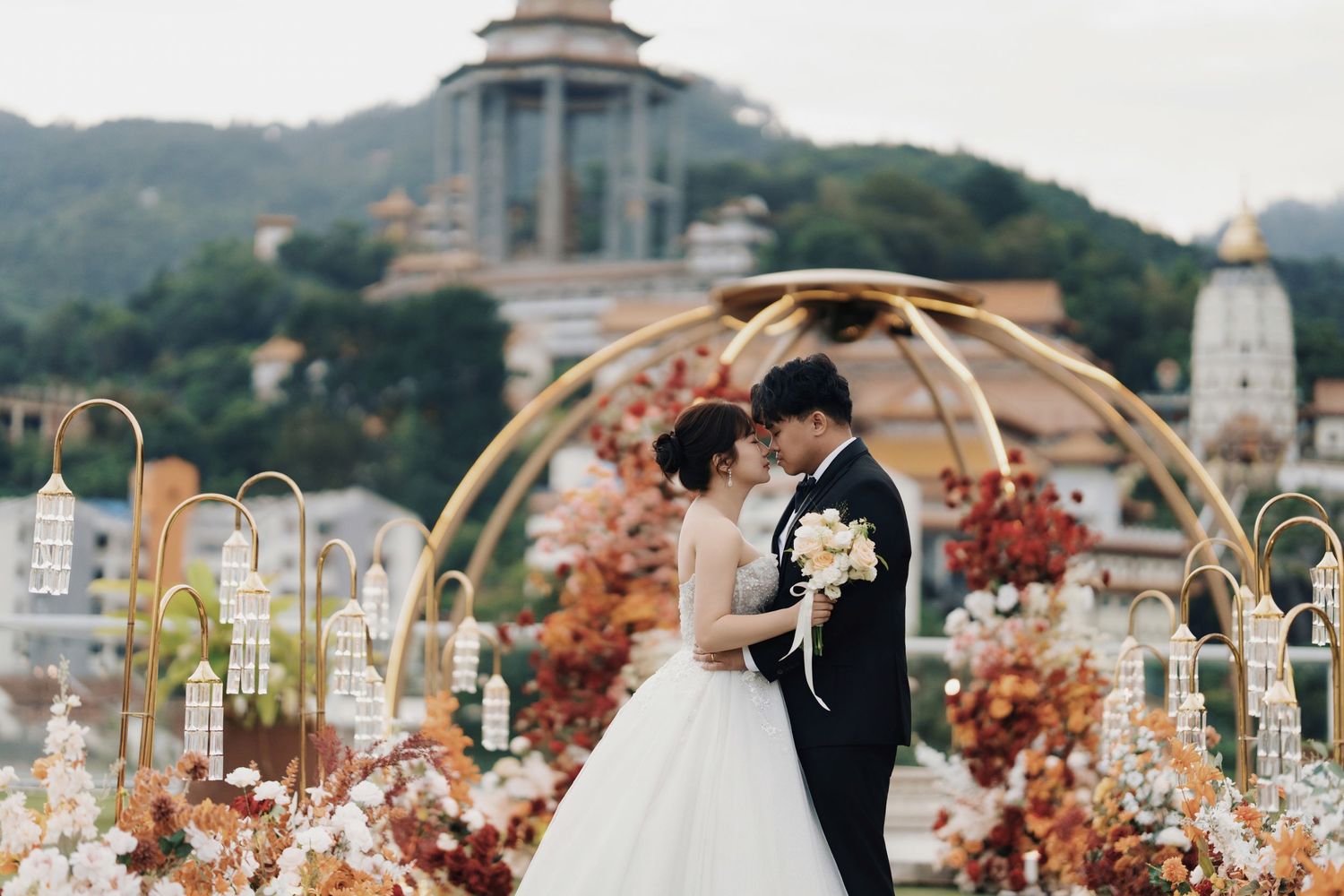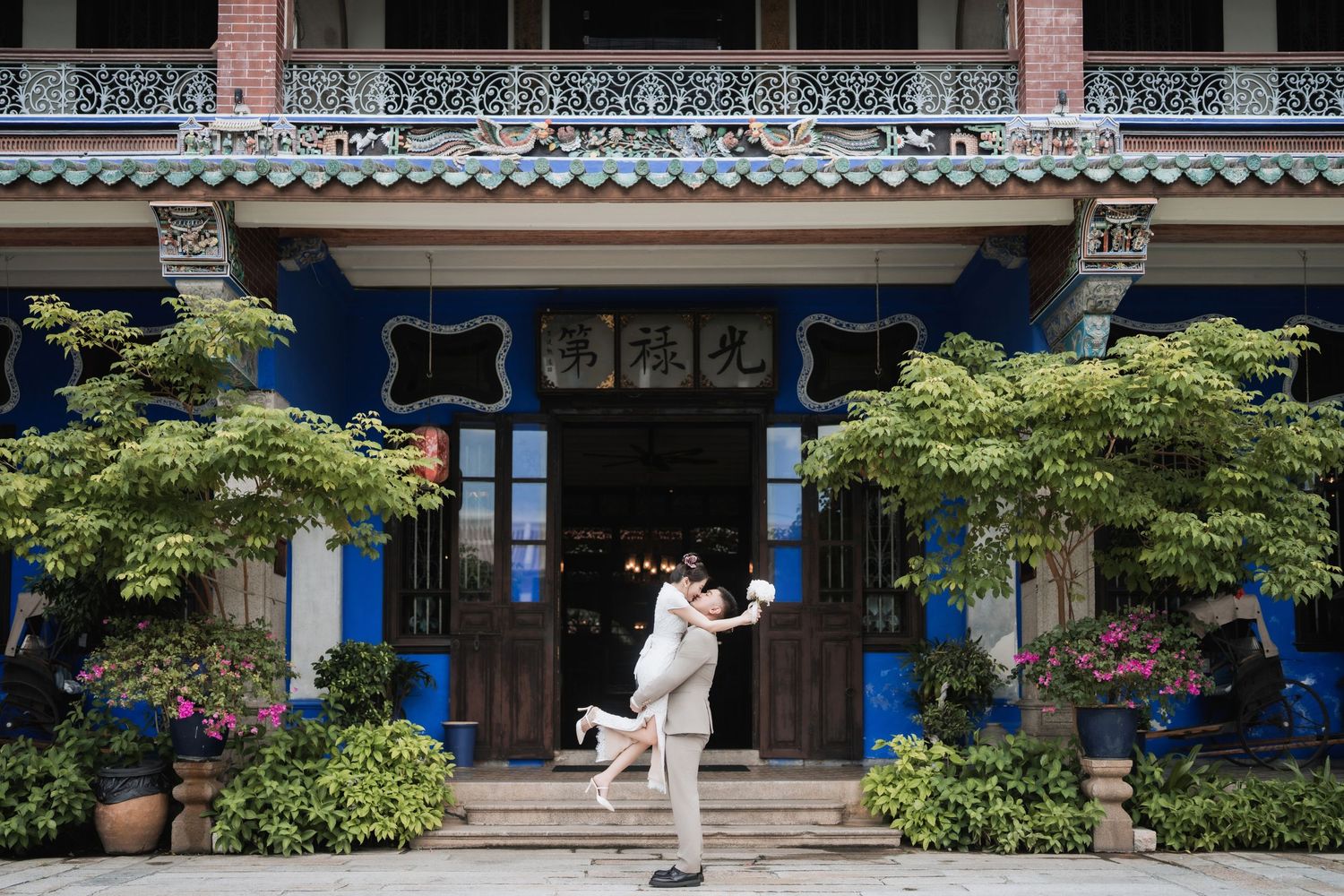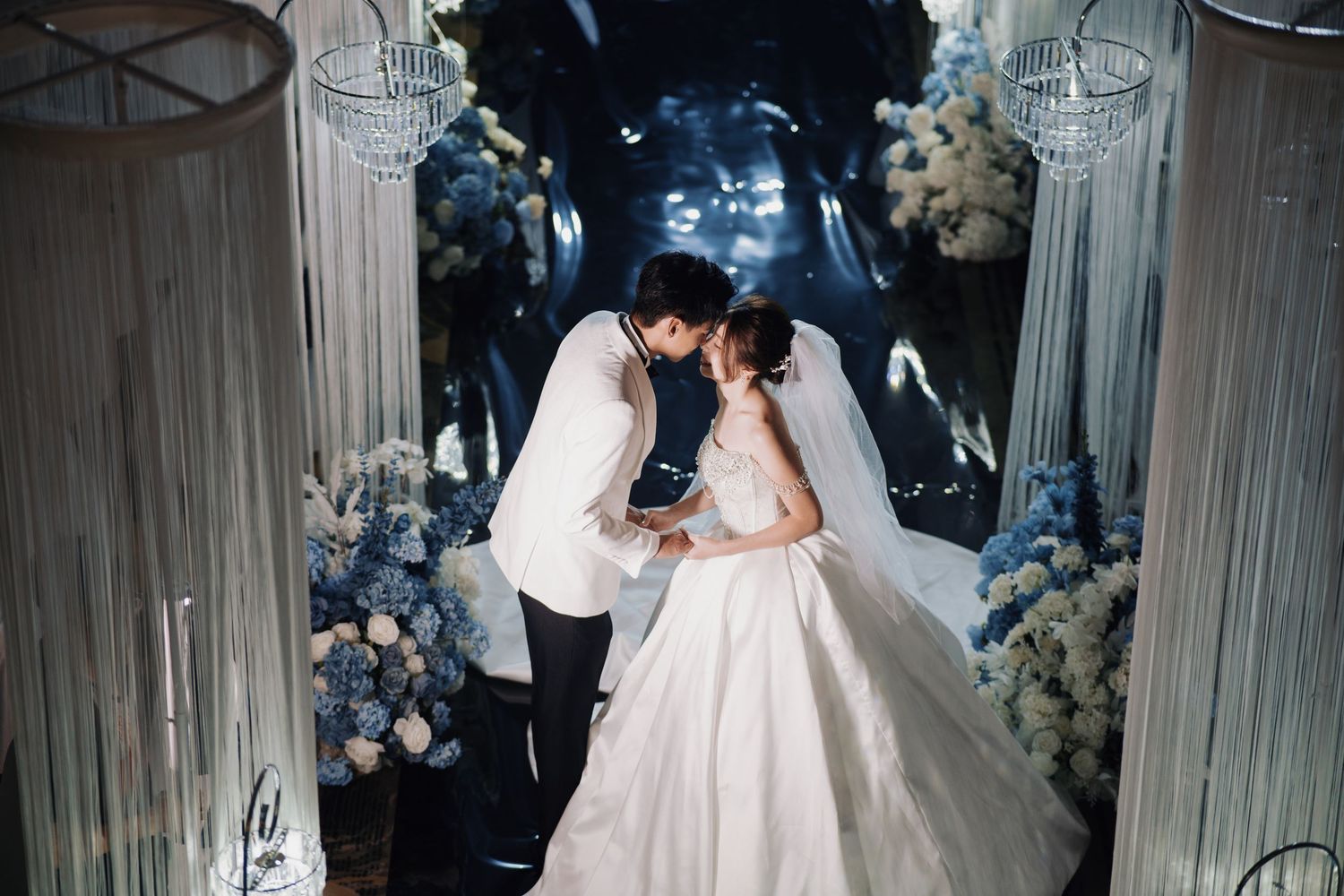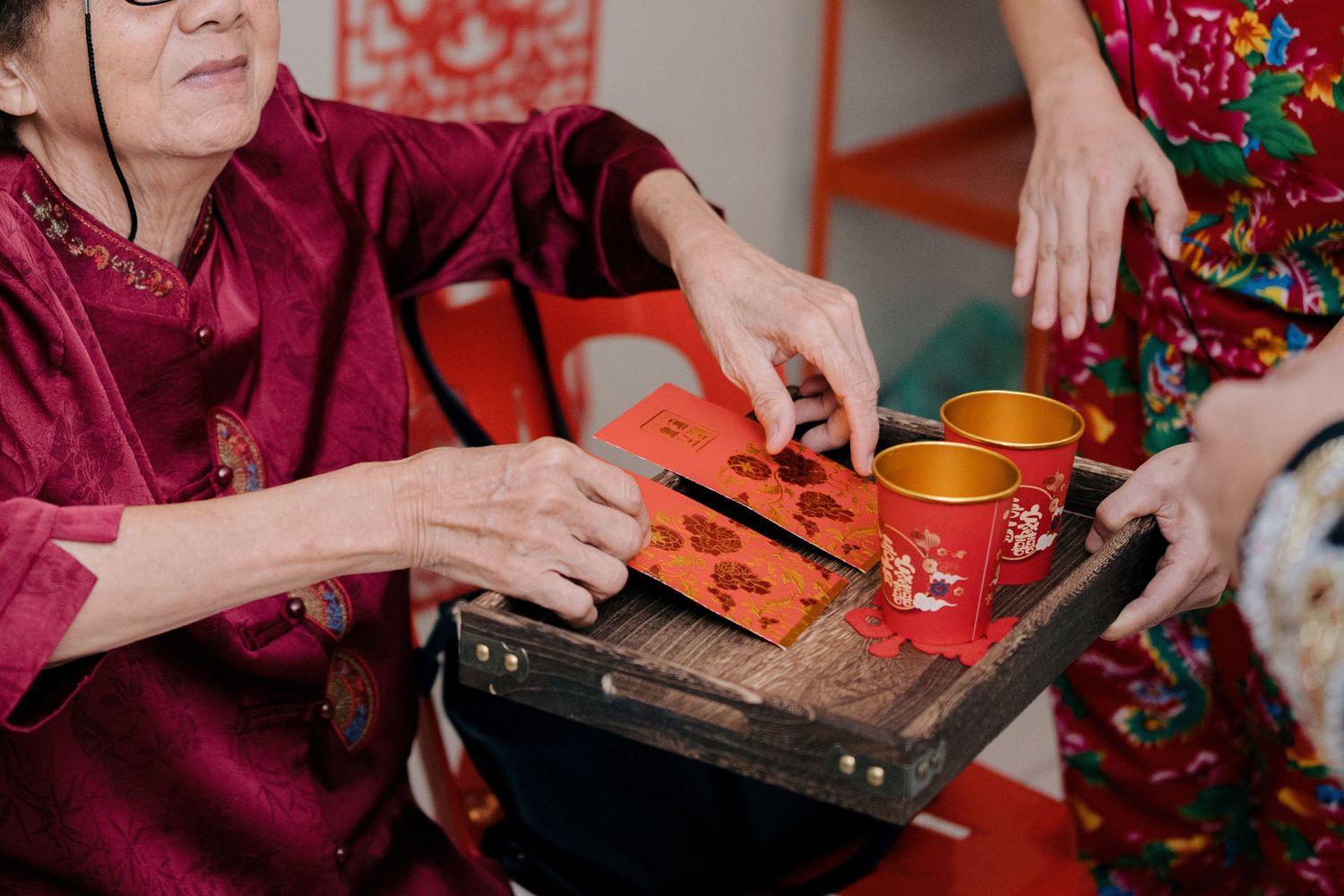
Planning a traditional Chinese wedding can feel like a marathon of rituals and checklists. But here’s a secret: these traditions aren’t meant to be a burden. They are actually beautiful, time-honored ways of showering the couple with blessings.
If you want to keep the elders happy without burning yourself out, this simplified guide to Guo Da Li, An Chuang, and Fetching the Bride is for you.
Table of Contents
1. Guo Da Li 过大礼 (The Grand Betrothal)
Think of this as the "official" proposal where the groom’s family shows their sincerity. It’s all about the exchange of gifts to seal the union.
Groom’s Side: Preparation Checklist
- Betrothal Money (Pin Jin 聘金): The "big" red packet.
- Liquor/Juice: 2 bottles.
- Dragon & Phoenix Candles (龙凤烛): 2 pairs.
- Wedding Cakes (Xi Bing 喜饼): To be shared with relatives.
- Oranges: For good luck.
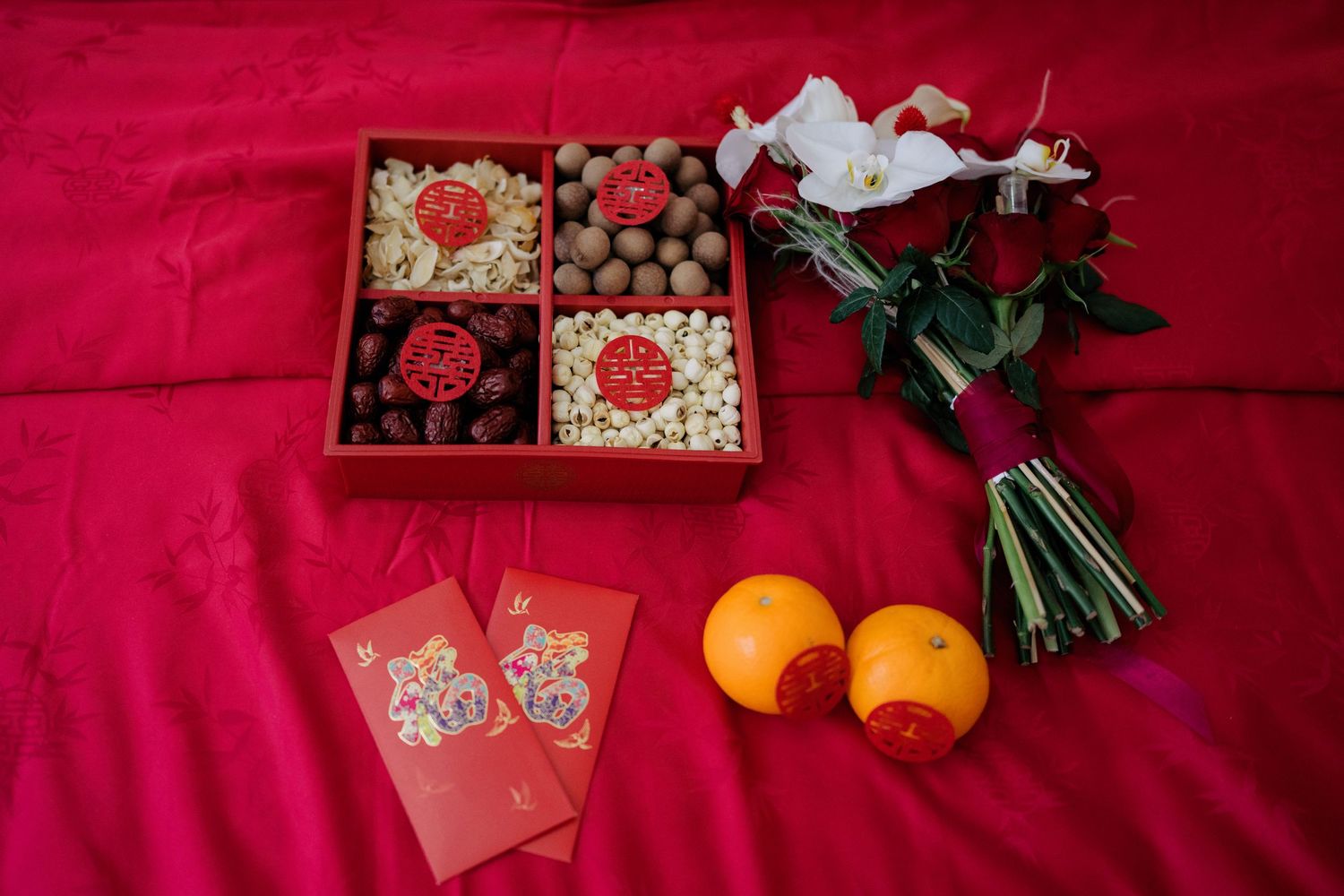
- Four Treasures (Si Jing Guo 四京果): 2 sets of dried longans, red dates, lotus seeds, and peanuts.
Bride’s Side: Return Gift Checklist (Hui Li 回礼)
- Betrothal Money (Pin Jin 聘金): A portion of the original amount is returned.
- Liquor/Juice: 1 bottle is returned (Many modern families substitute liquor with orange juice).
- Dragon & Phoenix Candles (龙凤烛): 1 pair returned.
- Wedding Cakes (喜饼) & Oranges: A portion returned.
- Four Treasures (Si Jing Guo 四京果): 1 set returned.
- Five Elements Seeds (五谷): Symbolizing a fruitful marriage.
- Eternal Lamps (长明灯): Traditionally kept lit to symbolize a bright future.
- New Bedding: For the matrimonial bed.
- Dowry 5-Piece Set: Traditionally includes a bathtub, baby potty (descendant bucket 子孙桶), washbasin, mouthwash cups, and a tray.
The Ceremony Flow
- Before leaving, the Groom prays to his ancestors, informing them of the ceremony and asking for a smooth day.
- Upon the groom's arrival, the Bride must stay in her room (out of sight) until the gifts have been accepted.
- The Groom and his party arrange the gifts neatly in the living area.
- The Bride’s family offers prayers to their deities and ancestors to announce the engagement.
- The Bride’s family prepares the "Hui Li" (return gifts) for the groom to take back.
- After the ceremony ends, the Bride and Groom can have some photos with both family together.
- The Groom heads home with the returned gifts and prays to his own ancestors once more to complete the ritual.
2. An Chuang 安床 (Bed Setting Ceremony)
This ritual is all about "blessing the nest." It’s meant to ensure the couple enjoys a harmonious marriage and a "fruitful" future (yes, we’re talking about babies!).
Preparation Checklist
Most of these items are typically prepared during the Guo Da Li 过大礼.
- Dowry 5-Piece Set: Usually includes a washbasin, mug, and other traditional domestic items.
- New Bedding Set: Specifically in red or auspicious wedding colors.
- Eternal Lamps (长明灯): A pair of red bedside lamps.
- Four Prosperity Beans & Five Grains (四京果 & 五谷): Symbolizing abundance and a fruitful harvest.
- Fate Coins (缘钱): 4 pieces to be placed at the corners.
- Red Packets (Angpao): 2 packets containing "lucky" amounts.
- Oranges: 2 fresh oranges symbolizing "Gold" and "Luck."
The Ceremony Flow
To ensure the best "Qi" for the room, the ceremony should be performed on an auspicious date and time.
- A "Good Fortune Woman" 好命人 (someone with a living spouse, children, and grandchildren) should be invited to change the bedsheets.
- Place the Fate Coins 缘钱 under the four corners of the mattress.
- As the "Good Fortune Woman" makes the bed, she should recite auspicious blessings 吉利话 (e.g., "May the couple be blessed with a harmonious marriage and many children").
- Arrange the Dowry Set, Prosperity Beans, Grains, 2 Red Packets, and 2 Oranges neatly in the center of the bed.
- Switch on the Eternal Lamps. (These must remain lit until the day after the wedding.)
- Once the ritual is complete, no one is allowed to touch or sit on the bed until the wedding night.
- The bride may then arrange her daily personal items around the room.
Important Taboos
- The bride must avoid being present in the room during the entire Bed Setting ceremony.
- Guests who are mourning or have recently experienced a loss should avoid the room during this time to prevent "clashing" with the wedding joy
3. Fetching the Bride 接亲 (Wedding Actual Day)
The morning of a Chinese wedding is a whirlwind of tradition, family, and joy. The Fetching the Bride 接亲 ceremony, is perhaps the most significant part of the day.
The Essential Checklist
- The Rings: Both wedding bands.
- Bridal Bouquet: For the groom to present to his bride.
- Red Packets (Ang Paos): Essential for door crashing games and various tips.
- Sweet Tea: Prepared with dates and longans for the tea ceremony.
- Tea Set: Disposable paper cups and a teapot.
- Gift Baskets + Fruit
The Step-by-Step Ritual
Phase 1: The Groom’s Departure
- The groom’s parent helps him put on his wedding jacket, symbolizing her blessing as he starts his own family.
- Before leaving, the groom prays to ancestors/deities, announcing: "I am heading out to pick up my bride. Please grant us a safe and smooth journey."
Phase 2: Preparing the Bride’s Home
- Once the groom’s side notifies the bride’s family that they are on the way, the Dragon and Phoenix candles should be lit.
- The bride’s family prays, announcing: "Our daughter is getting married today."
Phase 3: Arrival & The Room Entry
- A young boy from the bride’s family opens the car door for the groom.
- The groom's relative presents the gift baskets to the bride’s parents.
- The groom enters the bride’s room for these four key moments:
- Presenting the bouquet.
- Helping the bride put on her wedding shoes.
- Lifting the bridal veil.
- Exchanging/Putting on the wedding rings.
Phase 4: Respects & The Symbolic Return
- The couple prays to the bride's ancestors and performs the tea ceremony for her parents and elders.
- The couple walk around the front of the vehicle three times, and say: "We have returned!" They then hand a gift basket to the parents, and the parents provide a return gift in exchange.
Phase 5: Entering the Groom’s Home
- As they head to the groom's house, the groom’s family is notified to light their candles and pray: "A new daughter-in-law is joining our family."
- Final Rites:
- Paying respects to the groom’s side of the family.
- A young boy jumps on the new bed to bless the couple with fertility.
- Breaking the red paper on the "子孙桶" (Descendant's Bucket) to symbolize a lineage of many children and grandchildren.
Making Traditions Work for You
Modern weddings are all about balance. You don't need to follow every single rule to the letter—the most important thing is the intention behind them. When you approach these rituals with a smile, even the most traditional mother-in-law will be impressed!